Picking Up the Pieces How a Show Moved Forward After a Storm
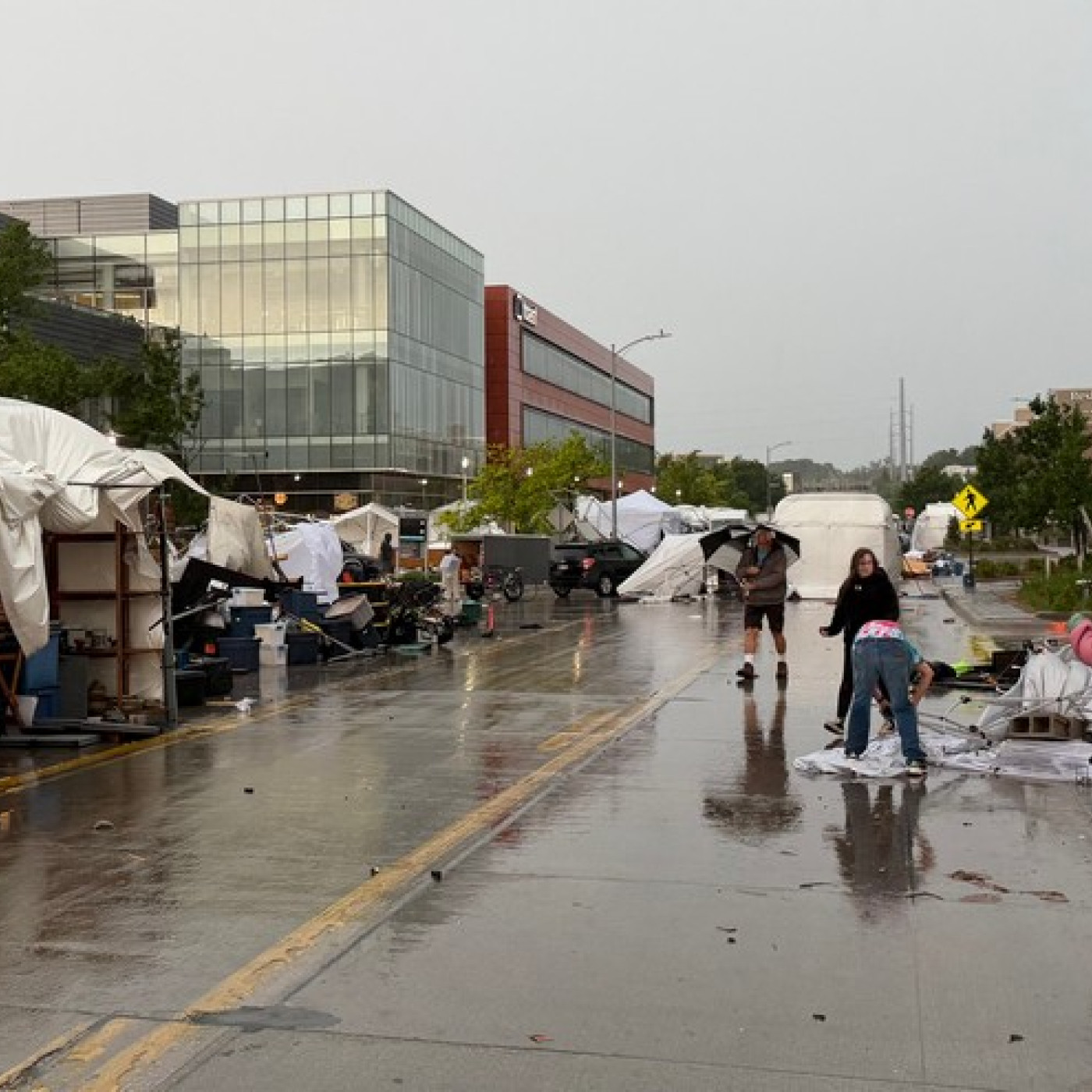
Months after a severe storm caused an estimated $135,000 in damage to artists’ work and booths at the Omaha Art Fair, the show’s promoter and board are developing a more comprehensive action plan for the future, and the impacted artists are working to replace what they lost.
“Having action plans are helpful—contact numbers for clean-up efforts if needed and proper equipment are all wonderful,” said Adam Weiss, an artist and the show’s promoter. “This is an unfortunate part of what we do at outdoor events. You can only prepare so much. When things like this happen, it's more in the actions you take afterward.”
The actions this show’s organizers took after the storm stood out to artists impacted by it. Instead of canceling the event, the group moved quickly to clean up the venue and open by early afternoon. They also set up a GoFundMe account to help the artists who were affected.
Weiss was on his way to the artists’ awards breakfast when it started raining on that June 13th morning. “Saturday was supposed to have a small, 20- to 30-minute little rain starting at 8:30 a.m., with 30 mph winds … nothing artists are not used to,” he said. Weiss darted into the 30 x 50 children’s tent that was attached to 14, 55-gallon drums filled with water, expecting it to be a quick rain.
He was talking to a security guard when the rain started picking up and getting stronger. “I watched as a smaller tent started to move and heard a table flip over. A minute later, a cheaper tent blew over,” Weiss said.
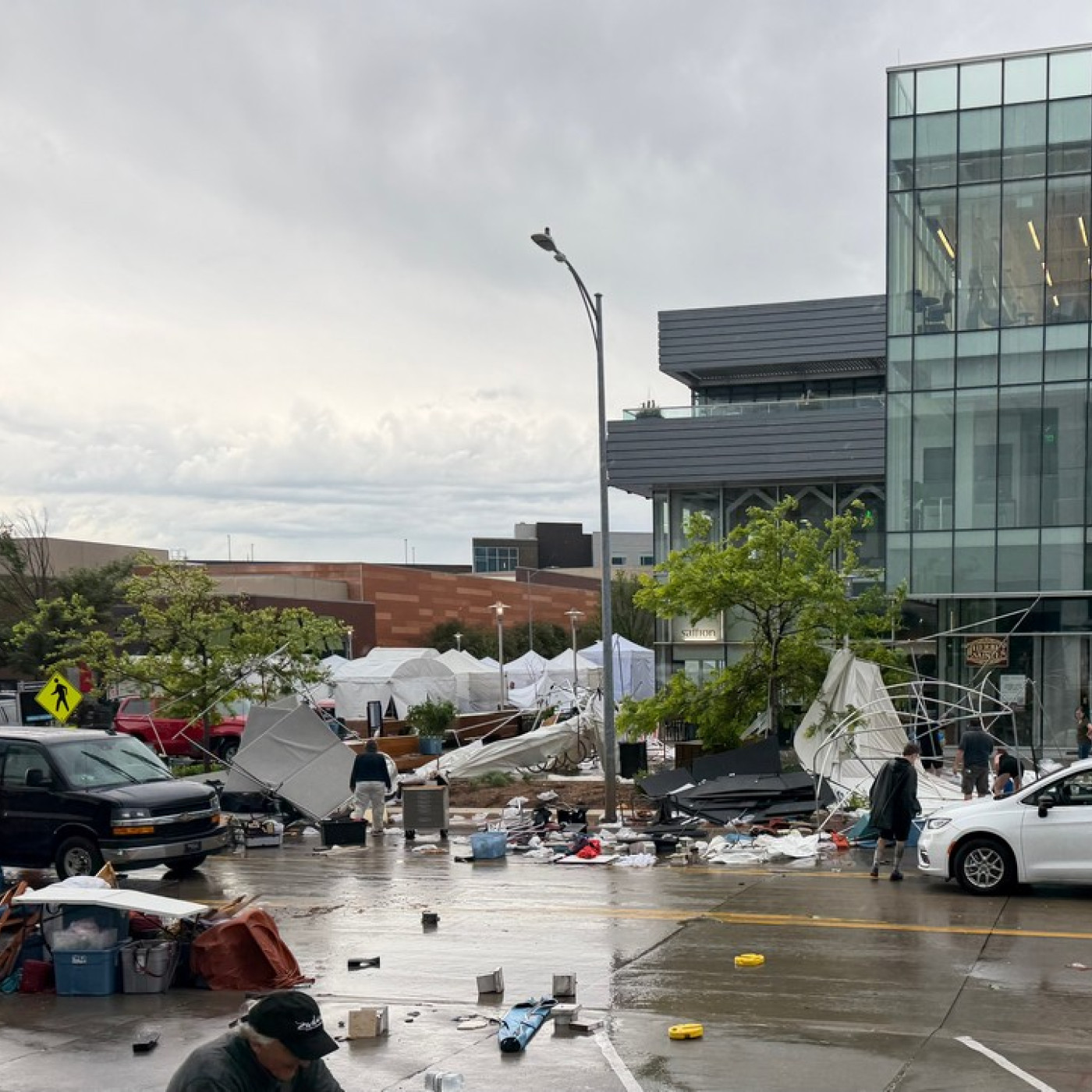
Then he saw three more tents go down and trees blowing over sideways while watching his own TrimLine tent with lower stay bars, lots of weights, and rachet straps from corner to corner moving a little but withstanding the strong wind. The tent he was under jumped up 6 inches and soon started sliding.
Weiss told the security guard to run, as he ran to his tent that was still standing but bending over and sliding a bit down the street. “I ran over and held down my booth against the wind, but it overtook me within 30 seconds. At this time, rain was coming down so fast the streets were flooded and the wind so intense that everything was blowing down,” he said.
From there, Weiss headed to the breakfast. He explained the situation and told everyone to check their belongings.
He said their storm plan included communicating with the artists in case of a severe storm/tornado forecast. Each board member led a section for artist communication.
With the forecast of 30 mph winds and rain for 30 minutes, nothing was sent to the artists, as that was nothing new to those who do outdoor fairs for a living, he said. “Our media relations board member posted updates on Facebook right away once the devastation was witnessed. She also sent out press releases to each of the major news agencies and radio stations we partnered with,” Weiss said.
This was Weiss’ second year as the show’s promoter and the first year with a board of directors. The 2026 show featured more than 150 artists' booths. Weiss said 18 booths were damaged or destroyed, and 23 were affected by wind or rain damage to the booths or artwork.
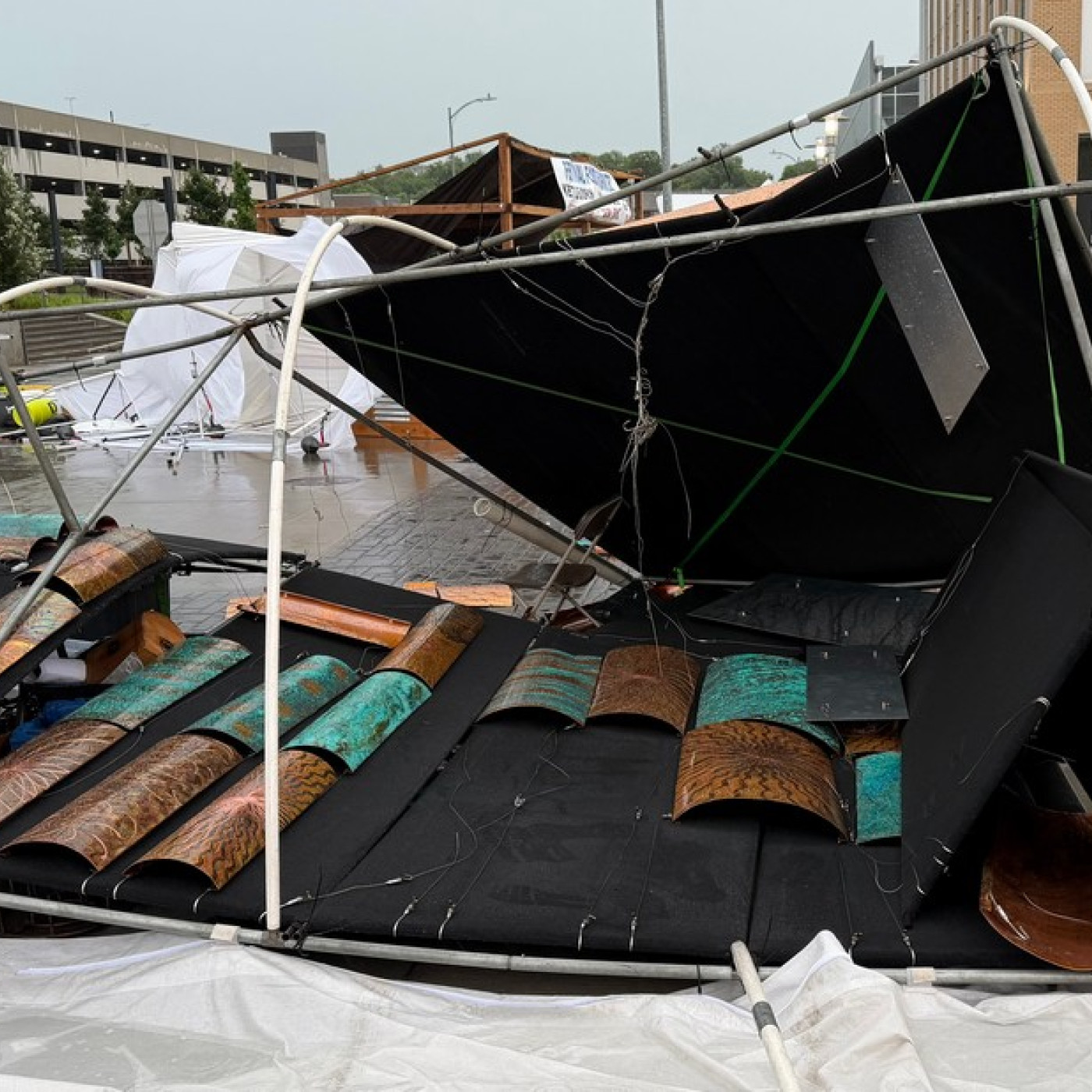
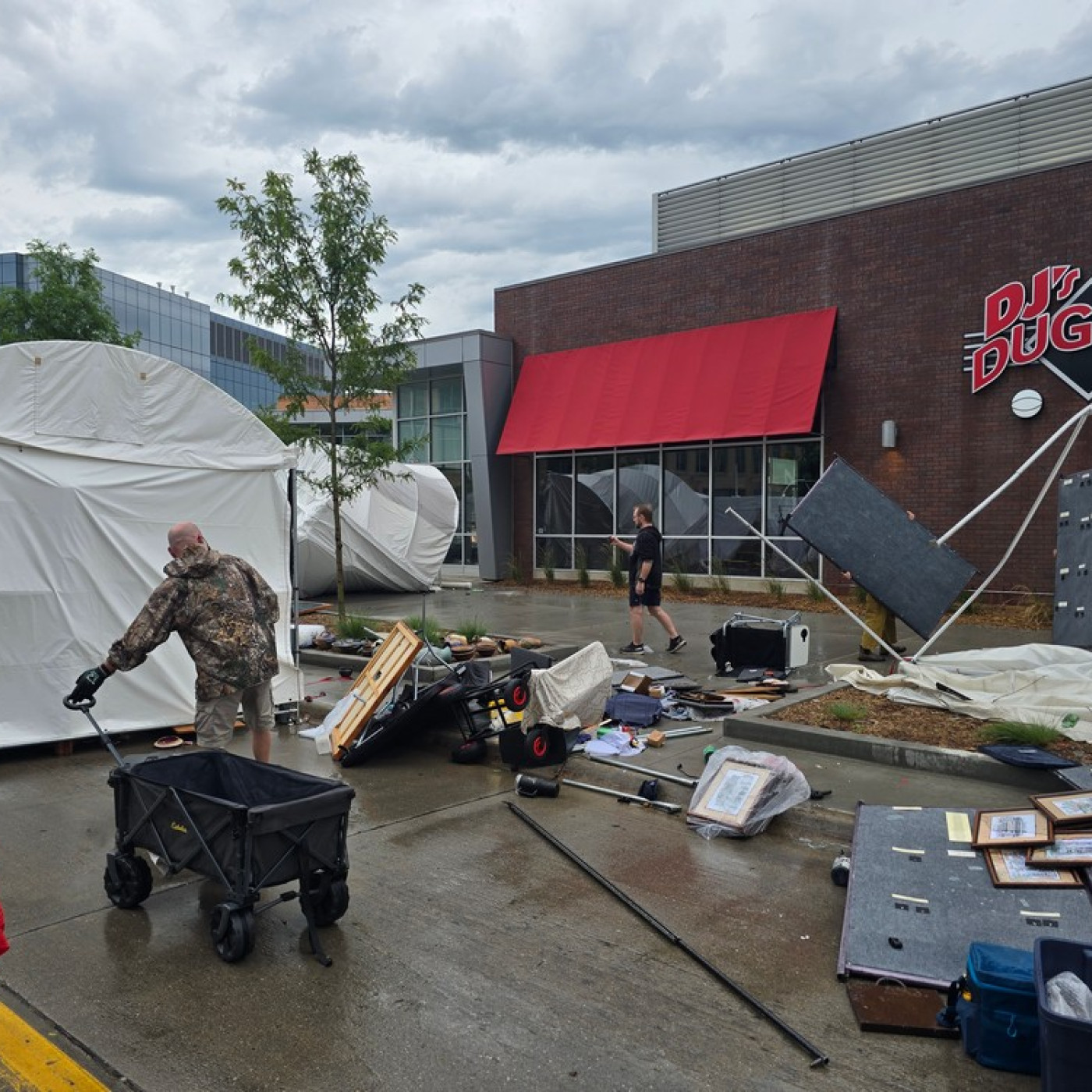
“There were two wind tunnels that formed going down 67th Street and Frances Street that combined for a quarter block of pure damage. Nobody survived this section,” he said.
In his 23 years of doing art fairs, Weiss said this was the first time his booth was completely blown down. His losses included more than $12,000 in destroyed artwork and $2,000 in damaged booth display items.
The effect on artists varied. Some had a piece knocked down and damaged a frame. Others had tents bent up, with new pieces needing to be purchased, he said.
“Print bins were knocked down inside artists’ booths that did not blow down (one painter lost over $10,000 worth of prints alone). A handmade purse artist had over 1,000 pieces waterlogged and was drying them out in the sun all day Saturday and Sunday while still selling them to patrons,” Weiss said.
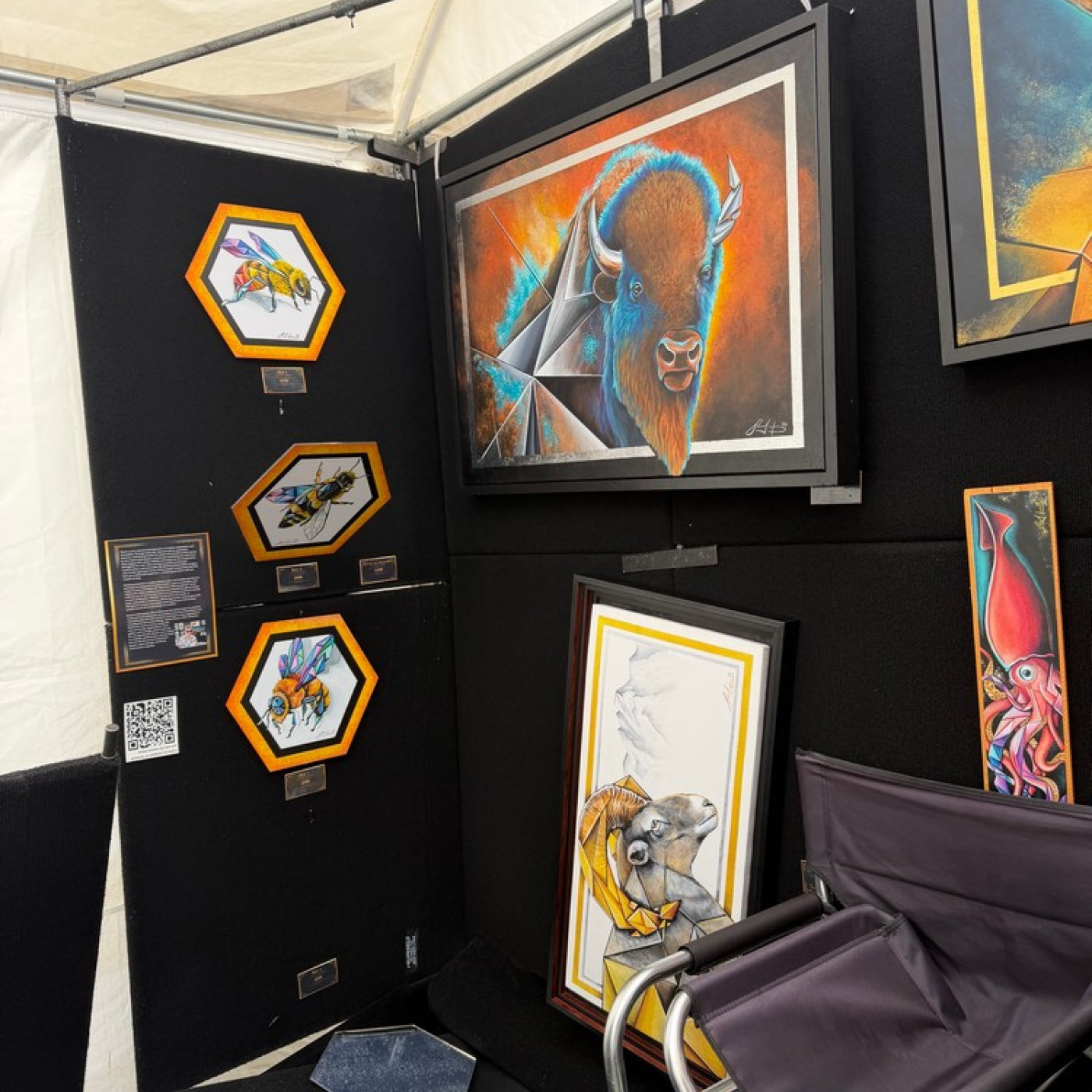
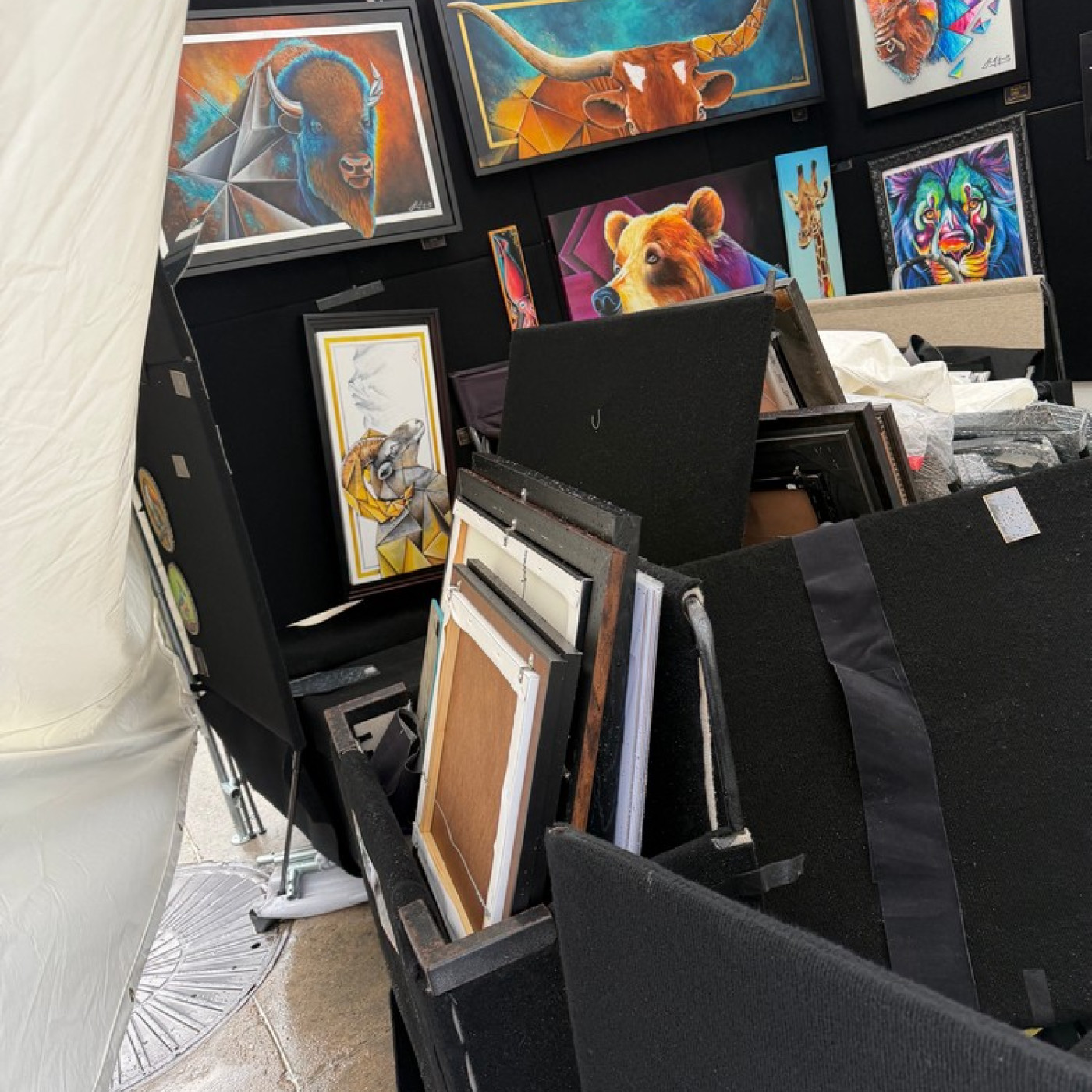
Shane Anderson lives in Apple Valley, Minnesota, and does about 15 to 20 shows per year across the Midwest and surrounding states. This was his first time participating in the Omaha Art Fair.
“After years of participating in art shows, I’ve developed a sturdy and reliable setup. I secure all of my ProPanels to the tent, which adds extra weight and stability during bad weather. I also place 50 pounds of weight on each tent leg,” Anderson said. “Additionally, I use a TrimLine tent, which is heavier-duty and provides even more stability.”
He noticed his booth location felt like a wind tunnel when he was setting up. During Saturday morning’s breakfast, a fellow artist looked outside and said, “Is your booth going to be OK?”
Anderson saw the rain coming down horizontally and took off for his booth. “It felt like I was running through a river because the rain was coming down so hard. When I reached my booth, the entire setup had been pushed approximately 4 feet forward and 2 feet to the right.
“The vinyl exterior walls of my TrimLine tent had ripped open and were flapping in the wind. Two of my display walls holding artwork had fallen over, and all of the medium-sized prints from my print bin had blown outside the booth and were ruined.
“My two-wheeler, loaded with canvas prints, had originally been inside the booth. However, because the entire booth shifted, it was now sitting outside in the pouring rain, and those prints were also ruined.
“I picked up the fallen display walls, stood inside the booth holding onto them, and used my body weight to help keep the tent down for approximately an hour in 70 mph winds. Was this the smartest decision for my personal safety? Absolutely not. Did it save my original artwork? Yes, it did,” Anderson said.
His losses totaled $9,120 and included all his backup paper prints, half of his regular paper prints, about 15 canvas prints, three broken ProPanels, and four broken poles on his tent. All his originals were saved.
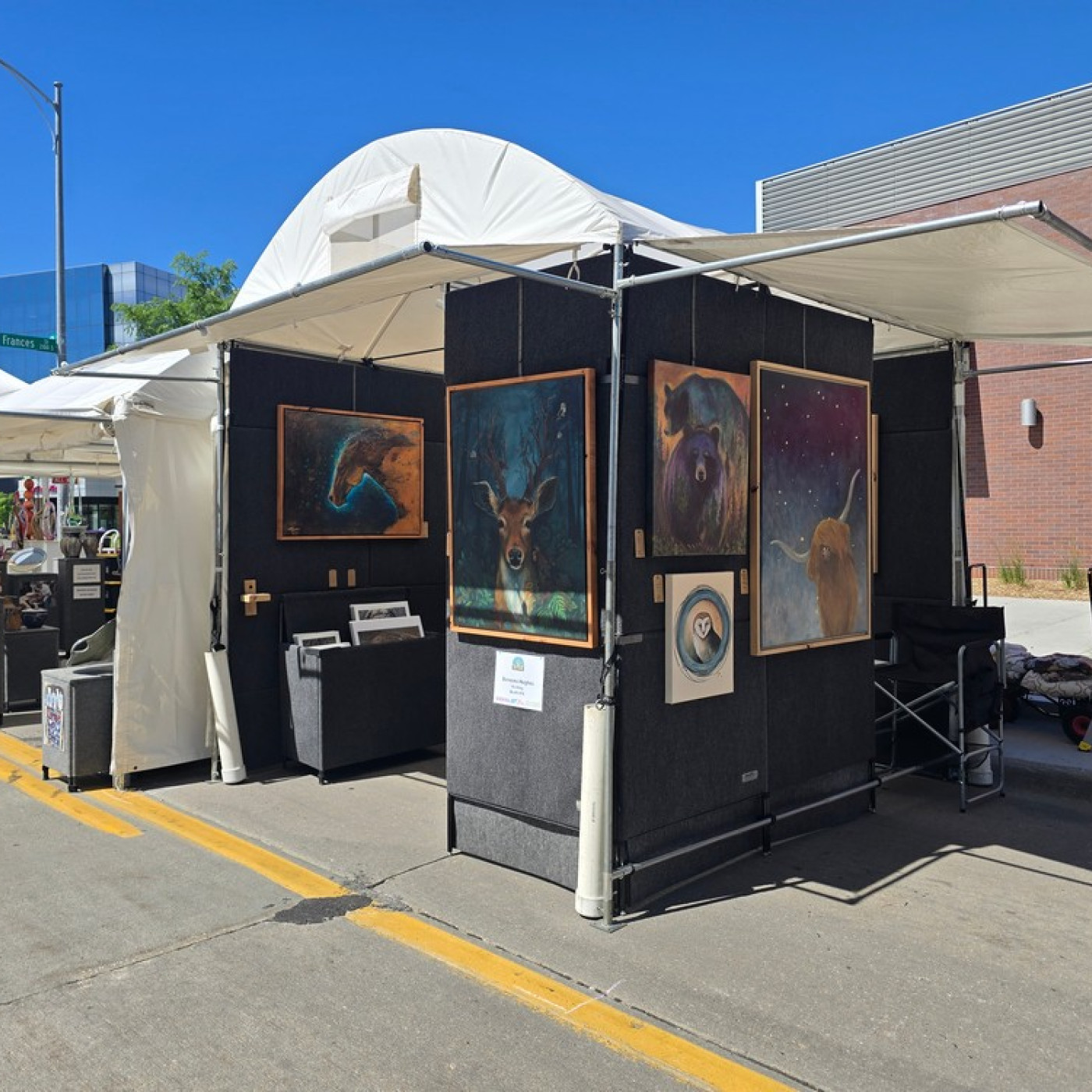
Deneena Hughes lives in Eden Prairie, Minnesota, a western suburb of the Twin Cities. She participates in two to three events per month—including outdoor and indoor art fairs, as well as gallery events.
She had done the Omaha show before— receiving Best in Show the previous year. She had a 9-foot TrimLine steel frame tent. “I use 50-pound weights on each corner, as well as attaching my ProPanels wall setup to the frame of the tent, which adds significant weight and stability to the structure. In addition, my paintings are large with heavy wooden frames which add weight to the structure,” Hughes said.
She was also at the breakfast when the storm began. “We were watching it from the hotel windows ... it became very dark, horribly windy with heavy rain blowing sideways. Based on my previous storm experiences, I was not initially concerned because my setup has withstood severe weather before.
“I was believing there would be damages I would need to help other artists with, but not likely any concern to my booth based on my past experience with my structure. I did not become concerned until Adam came into the breakfast all wet and bleeding and declared that the storm had taken out all artists in a particular area, which was the area I was located in.
“When the storm abated enough to go outside, I was floored at what had happened to my tent. It simply was not there ... it had hopped the curb, rotated 180 degrees, blown two spaces down from where I was, and been flattened.
“My artwork was scattered about. One painting even had a table from a neighbor across the street punctured through it. There was no way I could've held onto anything if I had gone out and tried. The damage was violent ... I would've been hurt,” Hughes said.
Everything in Hughes’ tent was damaged or destroyed. “My loss estimates exceeded $30,000 between tent and display structures and the cost of the artwork (large original paintings),” she said.
As the storm ended, Weiss called a few people and described the situation. The property owner was close by, immediately found Weiss, and asked if they were closing the show.
“With a year of planning, lots of money invested, artists making a living at these shows, and patrons expecting an art fair all weekend, I told her we were planning on delaying the opening until about 2-4 p.m. at the latest,” he said.
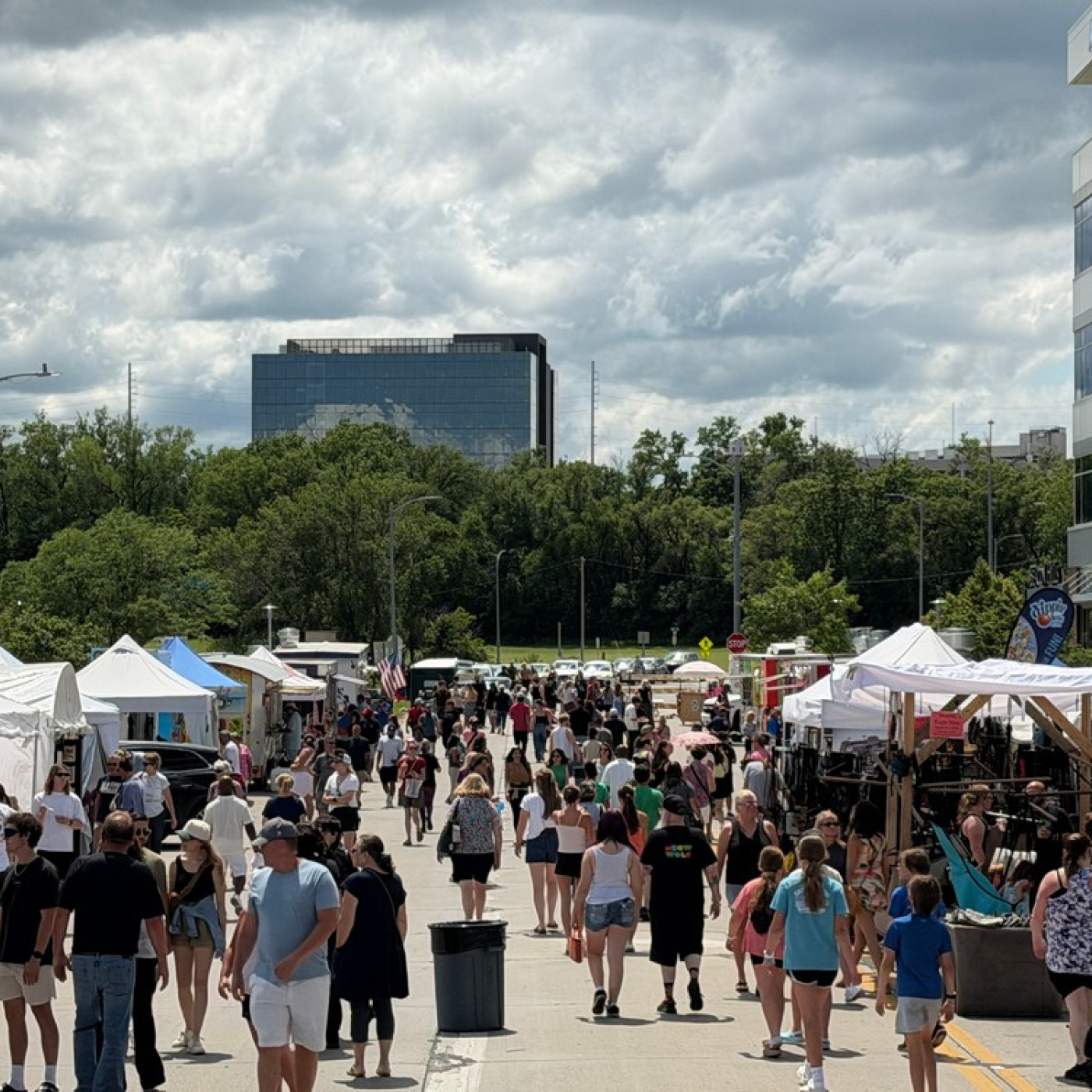
Weiss said, “From 9 a.m. to 1:30 p.m. or so, we were all in nonstop cleanup mode with major damage done first—helping artists pack up or throw away displays and artwork that were damaged, helping those who could reset their tents and displays, rework them and move poles around.”
Some artists needed help readjusting their tents into straight positions. Others purchased tents and reset their displays with artwork from their vehicles.
“With the fair’s tents damaged, we handed out our weights and straps to help strengthen up booths that were damaged. Pretty much every artist associated with the show was there helping clean up,” Weiss said. “We have all been through storms and feel the pain of watching somebody’s livelihood be damaged and destroyed. Artists were helping neighbors break down destroyed tents, pack up salvageable artwork, and in some cases, give hugs and listen to artists who lost everything break down and cry.”
Around 1:30 p.m., the area looked like an art fair again. Press releases were sent, and their Facebook page was updated.
“Once the event opened up on Saturday, crowds started pouring in. While there was a gap of about 20 artists in the middle of the show that were missing due to the storm, people came out in waves to support the fair,” he said.
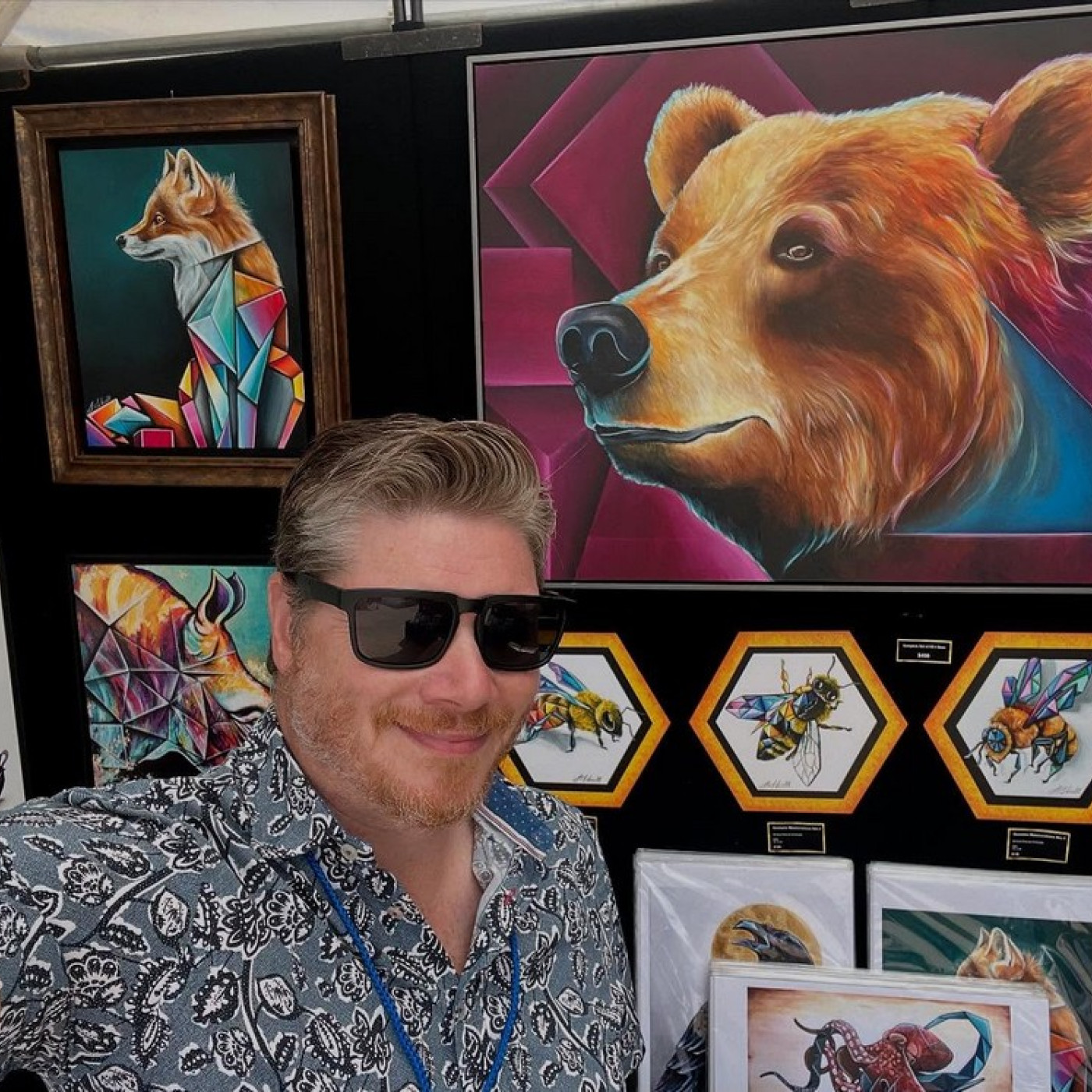
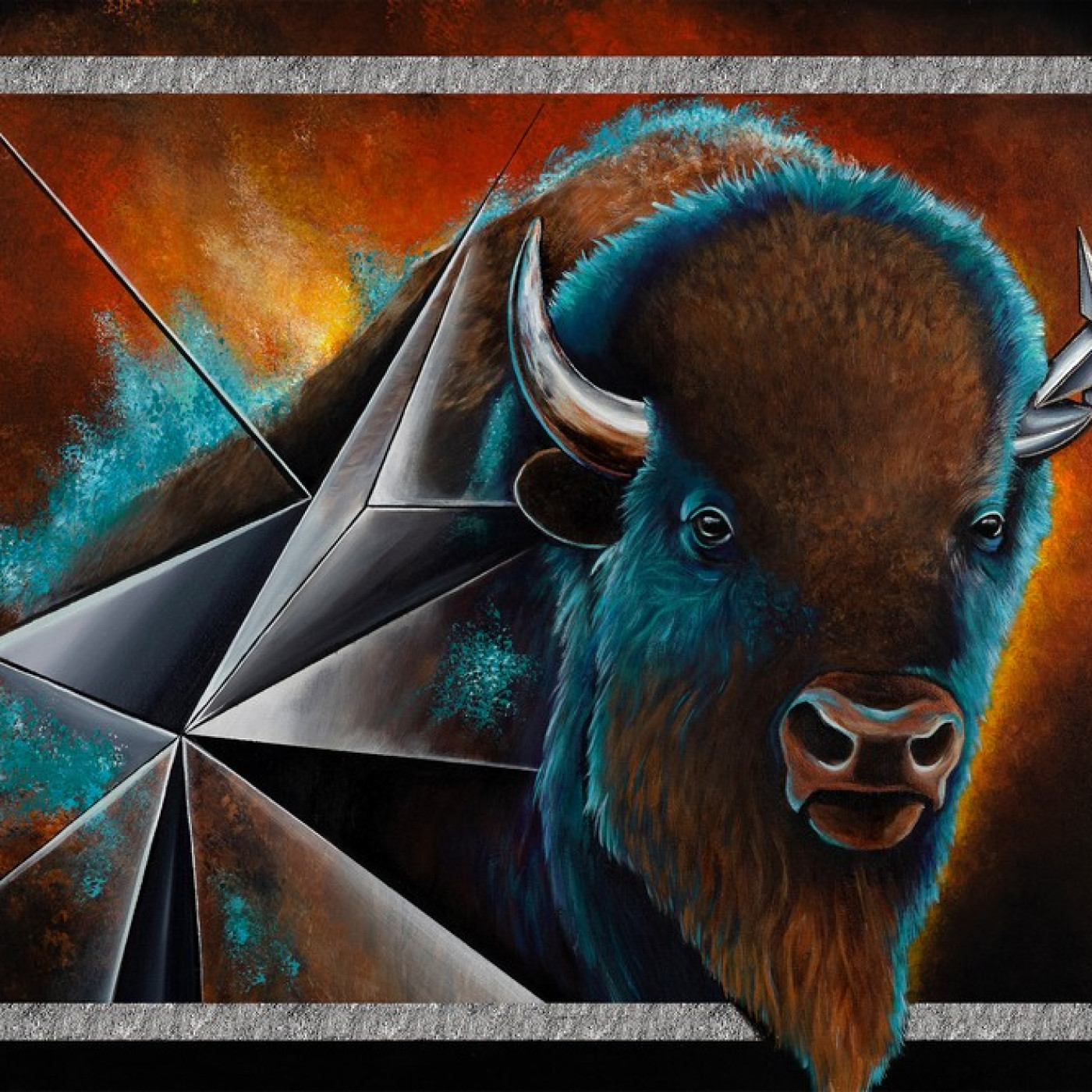
Anderson was able to reassemble his booth and finish the show. “Even after the initial storm passed, the wind remained extremely strong. Adam allowed me to park my van next to the booth to help block the wind, which made a big difference on Saturday. I didn’t park the van there on Sunday, however, and ended up spending most of the day physically holding onto my display walls and tent again,” he said.
Each time Anderson made a sale on Sunday, he asked a customer to hold his tent down while he rang up the sale. He said it became quite comical.
Anderson sold an original piece the day before the storm and ended up having a great show. But when factoring in the show’s costs, his losses, and appointments for physical therapy and chiropractic adjustments due to his injuries, he did not make a profit.
He was impressed with how Weiss handled himself and the situation and would do the show again. But Anderson said that the entire weekend was stressful, and he was feeling the effects months later. The night before heading to Chicago for a mid-September show, Anderson dreamt about how he would set up for it, knowing rain was forecast the entire weekend.
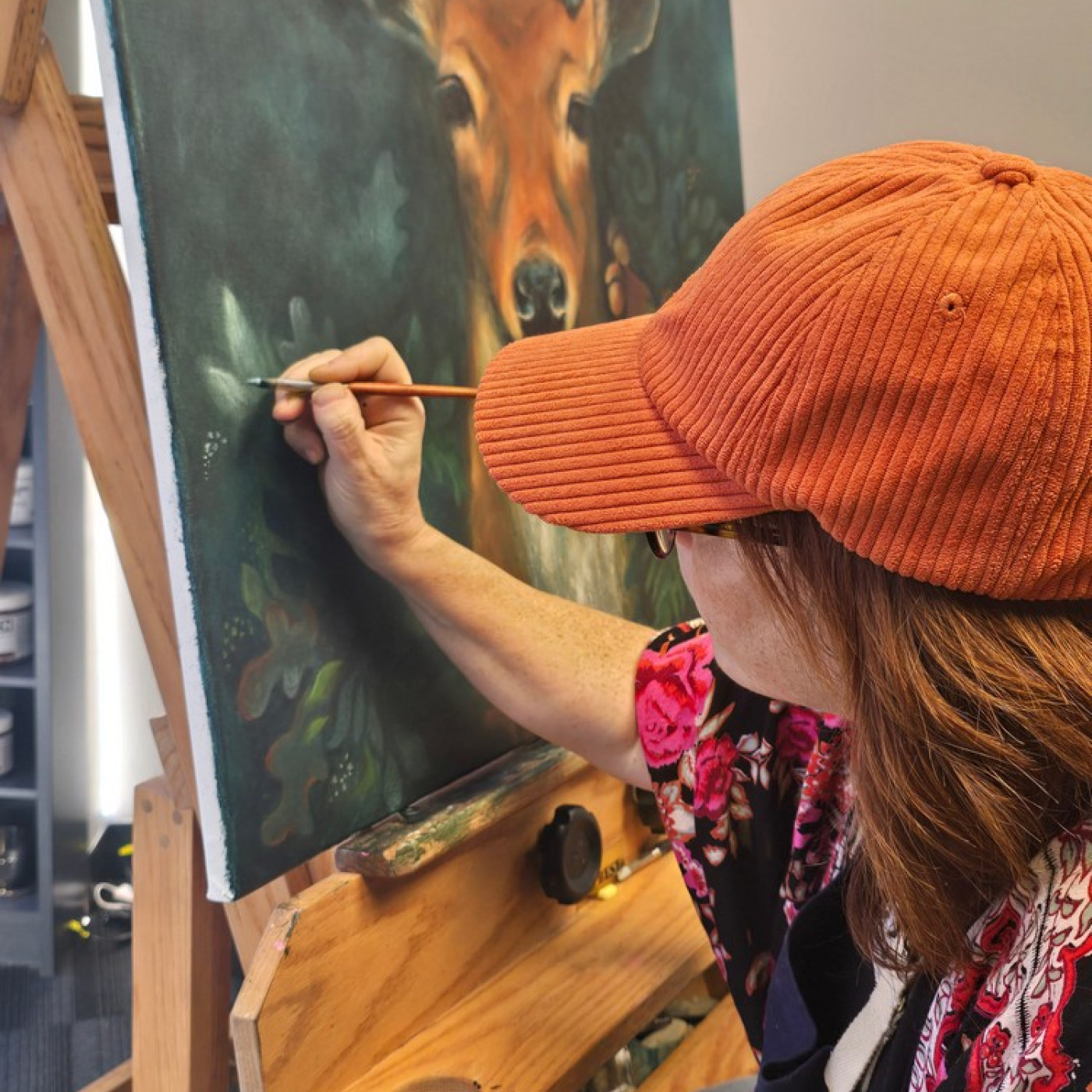
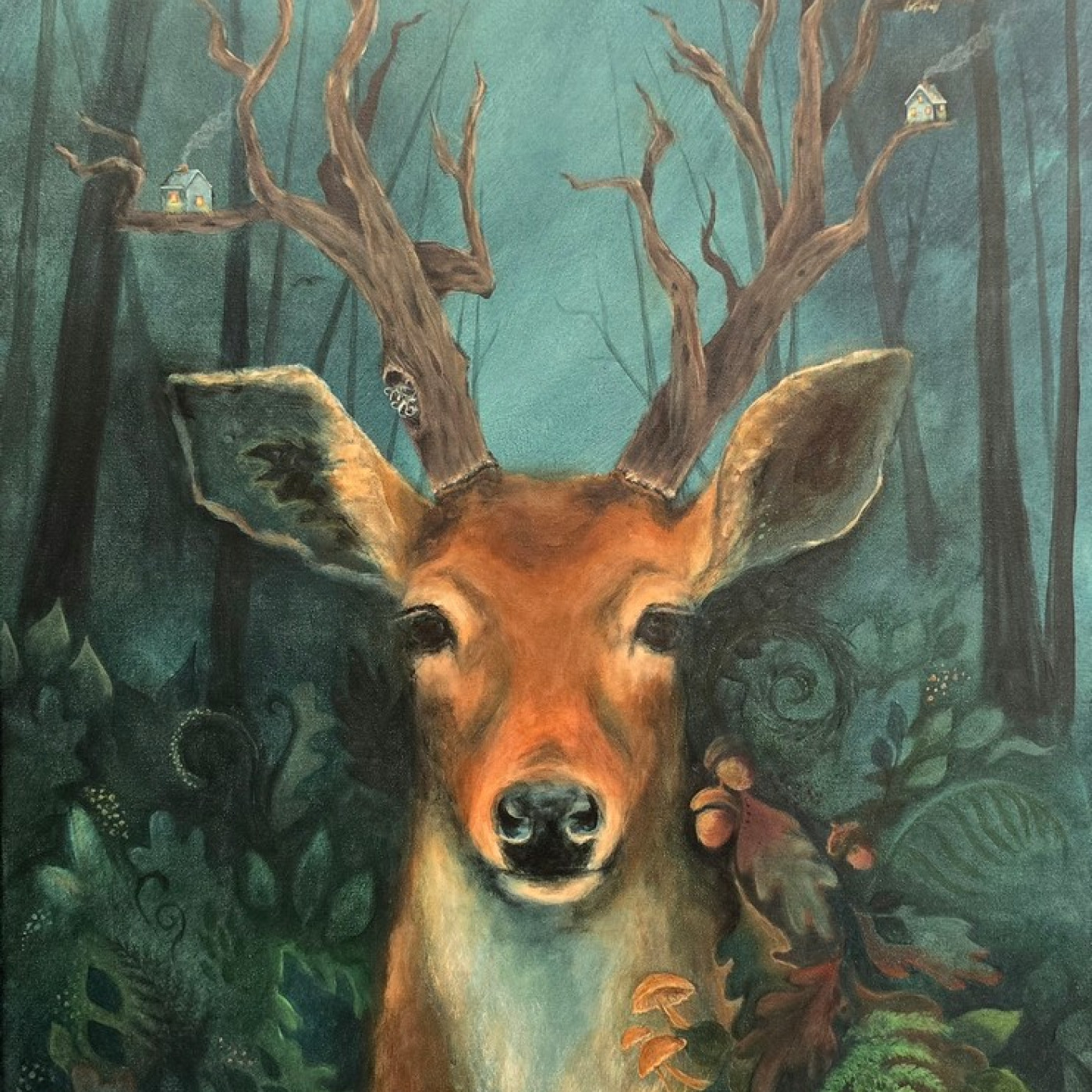
Hughes was unable to reassemble her booth and continue the show. The steel poles for her tent frame were bent beyond usability, her ProPanels and couplers were damaged, and all her artwork damaged beyond the ability to sell.
She had to cancel her summer show itinerary. “I had a few paintings not with me that were committed to two art galleries. These paintings were not with me in Omaha and were spared,” she said.
Due to her losses in Omaha, Hughes had to give up studio space outside of her home. She moved it into her home’s sunroom and is using a spare bedroom for her administrative work.
Between Omaha’s show and the end of August, she repaired her few original paintings, while her husband, Paul, repaired frames. She took canvas reproductions to a Denver show in August and a show close to home in September.
Originally waitlisted for the Denver show, Hughes was pulled off the list after Anderson—a friend of Hughes— contacted the show’s promoter and explained what had happened to her. She did well at the show, but it did not make up for her losses.
She used a pop-up tent for the Denver and Minnesota shows and realized at the local show how much the Omaha storm had affected her. It was a beautiful, sunny day when she was setting up for the local show, but it was windy.
Hughes said she could not reason with herself and was shaking for four hours as she set up. In October, she is doing another show in Minnesota and using her refurbished tent for the first time. “I’m nervous about it,” she said.
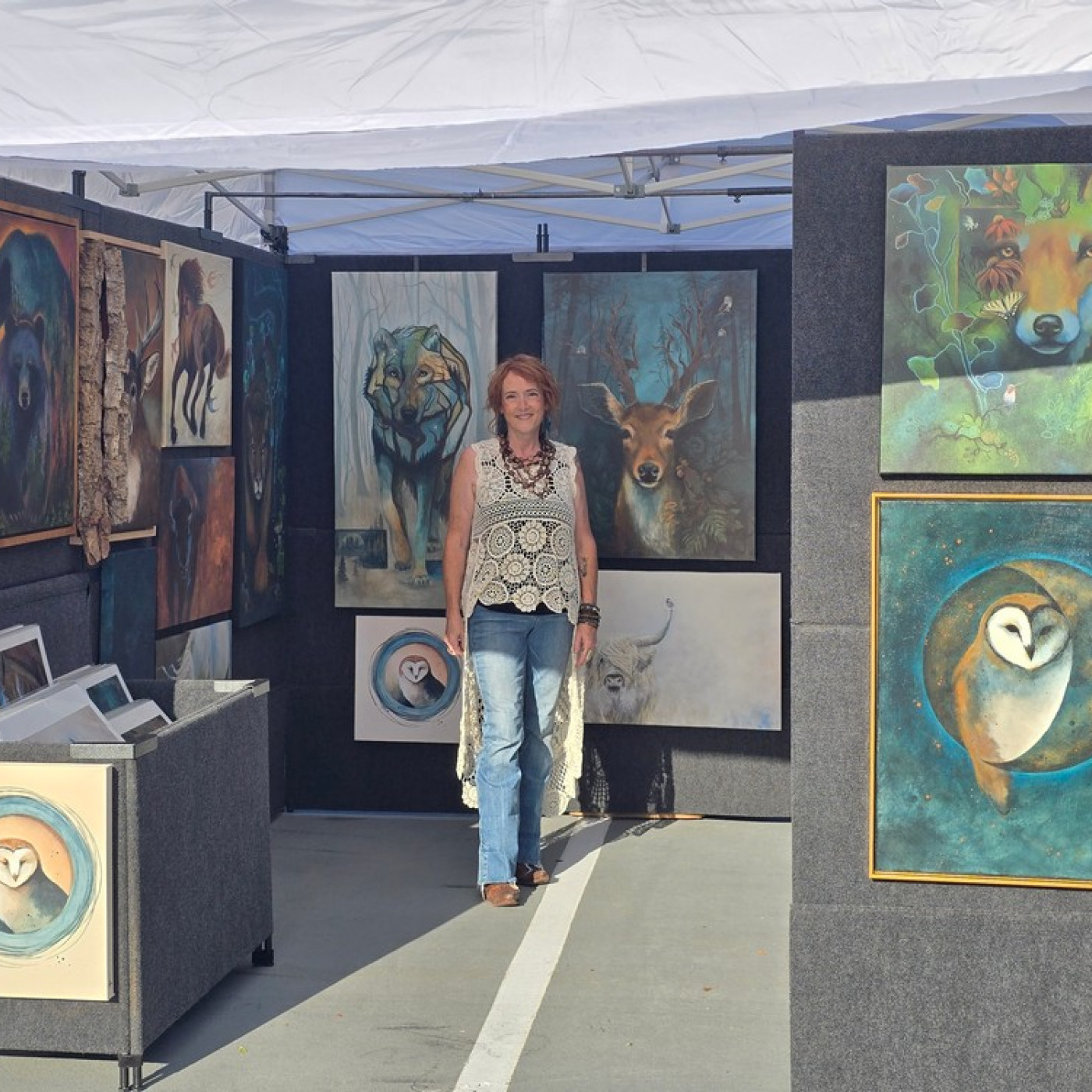
For Hughes, it is too early to say if she will return to Omaha. She said Weiss has done an amazing job loving and retaining the show, but the severe weather risk that time of year now gives her tremendous pause.
Artists were required to have insurance, and Weiss said most only had coverage for liabilities. Those with more comprehensive insurance recovered the costs of damaged tents, equipment, and artwork, he said.
Anderson’s insurance did not cover any losses from his damaged work, ProPanels, or tent. “I will be looking at new insurance this offseason,” he said. Hughes experienced the same thing and is also shopping for new insurance.
Due to the losses from the storm, board members discussed that same day how they could help the affected artists. Within days, a GoFundMe account was set up, news agencies were told about the plan, the show’s website was redesigned to include a page about the artists, and details were posted on the show’s social media sites.
“We raised $11,600 for affected artists by the end of June,” Weiss said. “While we were only able to send off checks for roughly 10% of the losses for those affected, we received many thanks from artists for our hard work and help that we were able to provide.”
Hughes received $1,900 from the Omaha GoFundMe effort. “It was very heartwarming and encouraging to experience the care and concern offered,” she said. “I have never heard of a show doing this before.”
Anderson chose not to request reimbursement, saying his losses were primarily retail inventory he could replace fairly easily. “I thought creating the fund was an incredibly thoughtful gesture by the show organizers, and I know several artists received much-needed assistance that helped them recover from their losses,” he said.
Weiss said Omaha has a big art community. Many people mentioned hearing about the storm from news agencies and the show’s social media posts. They wanted to support the artists by attending the show when it reopened.
“We had such a good turnout those next couple of days that we had quite a few people report their best Sunday sales and in two cases, they broke their all-time sales record,” he said. A few artists and food vendors who had great sales at the show donated to the GoFundMe effort.
“I called up one I knew and thanked them personally,” Weiss said. “They said, ‘I don’t know any show that would have stayed open with all that damage. I had a great show because you kept it open and let the public know about the show still going on … I just want to support those who could not open back up.’”
Most of the artists, board members, and community members Weiss talked to were amazed at how quickly they responded and reopened the show. “We are developing a more comprehensive list of duties and contacts in case this happens again,” he said. “However, I am very proud of my board for doing such an outstanding job.”
Promoters often spend a year planning and laying out their shows. “As an artist and promoter, I just advise that shows really look at whether or not they need to shut down the entire fair. I have been to fairs that have closed for rain and 40 mph winds expected at 1 p.m., and then the rest of the show was canceled— no reopening, just pack up your artwork and leave.
“While promoters spend a lot of time planning these events, these are many artists’ full-time jobs. Some travel eight hours or more to the fair, spending $1,000+ in booth fees sometimes. Taking away any selling opportunities due to weather is devastating to our income.
“While promoters cannot control the weather, they can control any communications before/afterward, can choose for the fair to remain open, and clean up damages if a storm does come through. They can also help with recovery efforts, both during and after the storm. Even links to affected artists on websites can help out,” he said.